
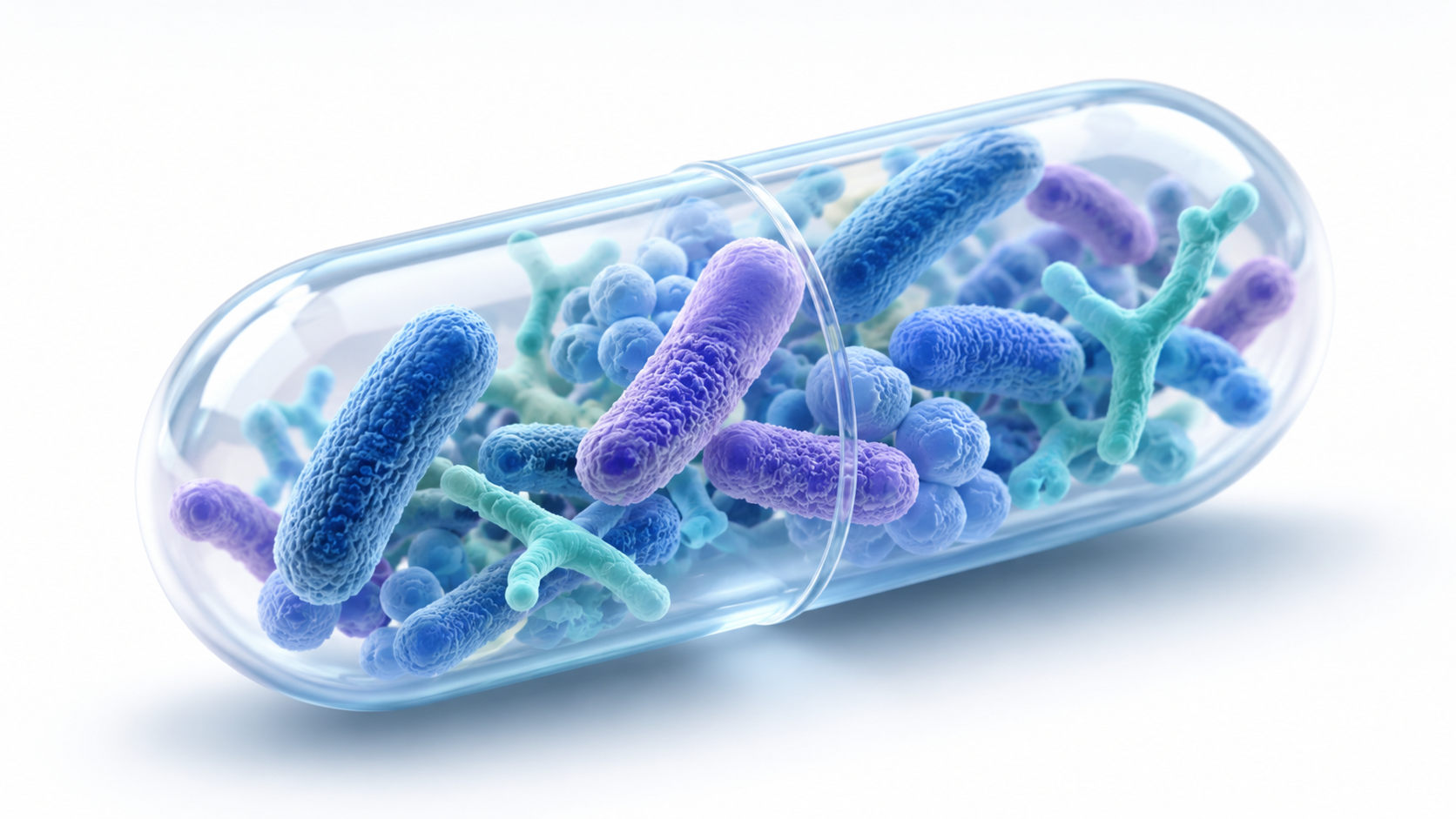
Faecal microbiota transplantation (FMT) has demonstrated the potential of using intestinal microbial communities to treat disease, particularly recurrent Clostridioides difficile infection (CDI). Its success has helped establish a growing field of microbiome-based therapeutics, with researchers exploring new approaches to delivering, characterising and standardising microbial treatments.From oral capsules to defined bacterial communities and engineered microorganisms, these developments aim to build on the principles of FMT while addressing the challenges of working with complex, living biological material.
How Has FMT Shaped Microbiome Therapeutics?
FMT involves transferring processed intestinal microbiota from a screened donor into a recipient’s gastrointestinal tract, with the aim of restoring a disrupted microbial ecosystem.
Its most established clinical application is recurrent CDI, where antibiotic treatment may eliminate the infection without fully restoring the microbial environment needed to prevent recurrence.
The clinical success of FMT has demonstrated that modifying the gut microbiome can produce meaningful therapeutic effects. However, donor-derived preparations present several challenges, including differences in microbial composition, limited donor availability, extensive screening requirements and batch-to-batch variability.
These challenges have encouraged the development of microbiome-based products that can be more precisely characterised, consistently manufactured and delivered through alternative methods.
Oral FMT Capsules: An Alternative Delivery Method
Oral capsules represent an important development in microbiome therapeutics, offering an alternative to administration methods such as colonoscopy and enema.
Capsule formulations may reduce the need for invasive procedures and simplify treatment delivery in appropriate clinical settings. However, developing these products requires careful consideration of microbial viability, stability and delivery to the intended region of the gastrointestinal tract.
Progress in this area has already led to regulatory approvals. In 2023, the US Food and Drug Administration (FDA) approved Vowst, the first orally administered microbiota-based product authorised to prevent recurrent CDI in adults following antibacterial treatment. Unlike conventional whole-stool FMT, Vowst contains purified bacterial spores derived from donated human stool.
TML.science is also developing its own oral FMT capsules as part of its work to advance microbiome-based therapeutics. This development aims to provide an alternative delivery format while addressing the quality, stability and safety considerations associated with encapsulated microbial preparations.
Although oral delivery offers practical advantages, encapsulation alone does not necessarily alter the underlying microbial composition of a preparation. The distinction between conventional FMT capsules and more selectively processed microbiota products depends on their composition, manufacturing methods and degree of characterisation.
Defined Microbial Communities: A More Targeted Approach
Another area of development involves defined microbial communities, also known as microbial consortia.
Unlike conventional FMT, which transfers a complex microbial ecosystem, these products contain selected microorganisms chosen for their potential biological functions.
Researchers are investigating whether specific bacterial strains or combinations can restore microbial functions, influence interactions within the gut ecosystem or strengthen resistance against harmful microorganisms.
Defined microbial communities may offer greater control over product composition, potentially improving manufacturing consistency and allowing researchers to investigate the contributions of individual strains.
However, microbial interactions are complex. The behaviour of a bacterial community cannot always be predicted from its individual components, and introducing selected microorganisms does not guarantee that they will successfully establish themselves within an existing gut ecosystem.
Ensuring strain stability, understanding microbial interactions and demonstrating clinical efficacy therefore remain important challenges.
Beyond FMT: Emerging Microbiome-Based Approaches
Microbiome therapeutic development extends beyond whole microbial communities and selected bacterial strains.
Researchers are also investigating microbial metabolites, bacteriophages and engineered microorganisms as potential therapeutic approaches.
Microbial metabolites are substances produced or modified by microorganisms that can influence biological processes within the host. Understanding their functions may help identify new therapeutic targets.
Bacteriophages are viruses that infect bacteria. Their ability to target particular bacterial populations is being investigated as a potential approach to modifying microbial communities.
Engineered microorganisms may be designed to perform specific biological functions, such as producing therapeutic compounds or responding to particular conditions within the gastrointestinal tract.
These approaches could offer more targeted ways of influencing the microbiome. However, many remain experimental, and further research is needed to establish their safety, effectiveness and clinical applications.
The Manufacturing Challenges of Living Therapeutics
As microbiome therapeutics become more sophisticated, manufacturing remains a critical consideration.
Unlike conventional pharmaceutical products containing a well-defined chemical compound, microbiome-based therapeutics may contain multiple living microorganisms whose characteristics can be affected by processing, preservation and storage.
Manufacturing these products requires careful control of several factors:
- Microbial viability: Preserving the survival and relevant biological characteristics of microorganisms throughout processing and storage.
- Product consistency: Managing variability between batches, particularly in donor-derived preparations.
- Safety testing: Identifying potential pathogens, contamination and antimicrobial resistance risks.
- Stability: Establishing suitable processing, preservation and storage conditions.
- Quality control: Developing reliable analytical methods to characterise complex microbial products and assess their quality.
These considerations become increasingly important as microbiome therapeutics progress from research applications towards standardised pharmaceutical products.
In its August 2026 position paper, the UK’s Medicines and Healthcare products Regulatory Agency (MHRA) identified product characterisation, manufacturing variability, potency assessment and stability as important considerations for microbiome-based medicinal products.
For manufacturers, the challenge is not simply preserving microorganisms, but developing reproducible processes that maintain product quality while meeting appropriate safety and regulatory standards.
How Is Regulation Evolving?
Regulatory frameworks are developing alongside advances in microbiome-based therapeutics, reflecting the diversity of products, manufacturing processes and clinical applications within this field.
In the United States, the FDA has approved two donor-derived microbiota products for preventing recurrent CDI in adults following antibacterial treatment: Rebyota, administered rectally, and Vowst, administered orally.
In the UK, the MHRA confirmed in August 2026 that microbiome-based medicinal products are regulated under the existing medicines framework. At the time of its position paper, no microbiome-based medicinal product had received UK marketing authorisation, although FMT could be supplied through specified routes, including clinical trials and certain unlicensed medicine arrangements.
The European Union’s Substances of Human Origin (SoHO) Regulation, which explicitly includes intestinal microbiota, will introduce additional requirements from August 2027 for activities involving human-derived biological material.
As new formulations and technologies emerge, regulatory clarity will be important in supporting innovation while ensuring that products are appropriately assessed for quality, safety and clinical effectiveness.
The Future of Microbiome Therapeutics
The development of next-generation microbiome therapeutics represents a shift towards more controlled, standardised and potentially targeted approaches to modifying microbial communities.
Oral formulations may offer more accessible methods of administration, while defined microbial consortia and emerging technologies could allow researchers to investigate specific microbial functions and therapeutic mechanisms.
Nevertheless, greater standardisation or technological complexity does not automatically translate into improved clinical outcomes. Each product requires evidence appropriate to its composition, intended use and potential risks.
Future progress will depend on combining advances in microbiome research with reliable manufacturing processes, robust quality controls and well-designed clinical studies.
FMT has provided an important foundation for this field. Building on that foundation will require translating scientific discoveries into safe, reproducible and clinically validated microbiome-based therapeutics.
