

The gut microbiome is a complex community of microorganisms living within the gastrointestinal tract. Unlike our genome, the microbiome is not fixed. It can change throughout life in response to factors including diet, ageing, illness, medications and environmental exposures.
Growing understanding of these changes has led to interest in stool banking, also known as microbiota or microbiome banking. This involves collecting, processing and storing an individual’s own intestinal microbiota for potential future use.
One potential future application of stored microbiota is autologous faecal microbiota transplantation (autologous FMT). But what exactly is autologous FMT banking, and why might someone choose to preserve their microbiome?
Stool banking involves collecting, processing and storing an individual’s stool microbiota under controlled conditions for potential future use. In autologous stool banking, the stored microbiota remains exclusively linked to the individual from whom it was collected.
Autologous FMT refers to the potential future use of this stored microbiota in a faecal microbiota transplantation for the same individual. This differs from conventional donor FMT, where microbiota originates from a screened donor.
Stool banking does not guarantee that the stored material will later be used for autologous FMT. Any future use would depend on the suitability of the material, the individual’s clinical circumstances, available scientific evidence and the regulatory requirements in place at the time.
Why is there growing interest in microbiome banking?
The gut microbiome can be influenced by many factors throughout life. Antibiotics are one well-established example. While they are essential medicines, antibiotics can affect microorganisms beyond those being targeted and alter the wider intestinal microbial community.
Other medical treatments, illness, diet, lifestyle and ageing may also influence microbiome composition.
This has raised an emerging question: could preserving an individual’s microbiota before a significant change or disruption provide a useful biological resource for the future?
Some individuals may therefore consider stool banking before planned antibiotic treatment, certain other medical treatments or major surgery, or simply during a period of general good health.
However, research into the future applications of autologous microbiota is still developing. Microbiome banking should be viewed as biological preservation rather than a guarantee of future treatment.
What Happens During Autologous FMT Banking?
Preserving microbiota for potential future clinical use involves more than simply freezing a stool sample. As microorganisms are living biological material, factors such as processing conditions, temperature and storage can influence the characteristics of the preserved material.
The process may include:
Collection → Sample verification → Controlled processing → Cryogenic storage → Long-term monitoring
At TML.science, autologous samples are processed within our MHRA-regulated manufacturing environment using documented procedures and quality management systems. Following collection, samples are received and verified before undergoing controlled processing designed to preserve microbial viability.
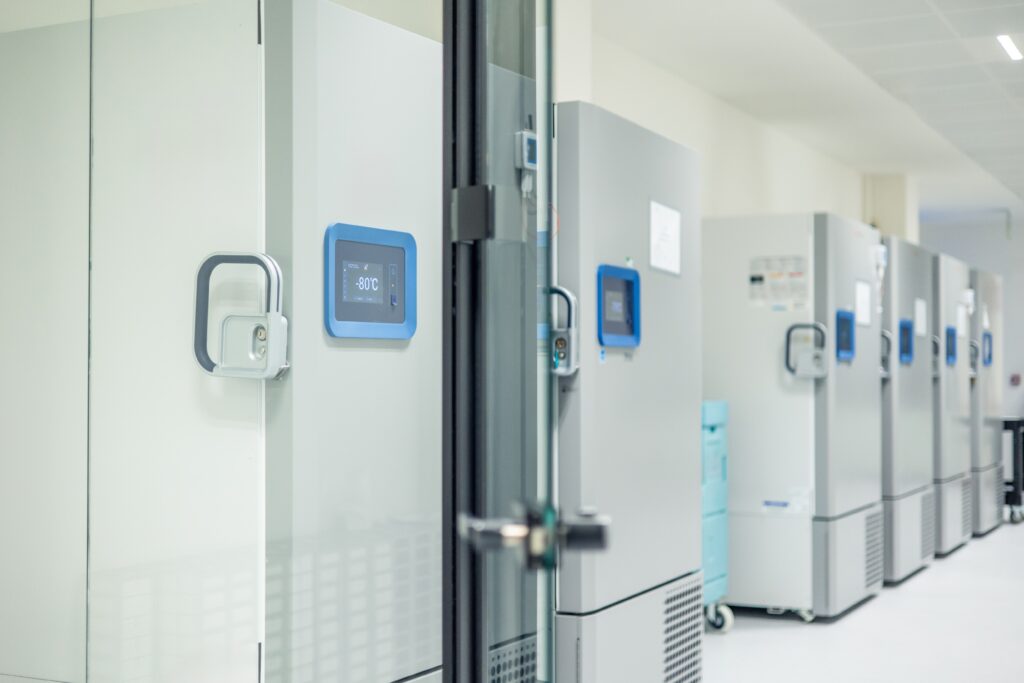
Processed material is then maintained under controlled frozen conditions with ongoing temperature monitoring. Throughout processing and storage, chain-of-identity and chain-of-custody records maintain the connection between each individual and their stored microbiota, providing traceability from the original sample through long-term storage.
Autologous stool banking at TML.science
TML.science provides autologous FMT banking and microbiota preservation services, supporting the collection, processing and long-term storage of an individual’s own microbiota.
- The service includes:
- *Sample collection kits with instructions for safe and hygienic collection
- *Sample receipt and verification
- *Controlled processing using validated manufacturing procedures designed to preserve microbial viability
- *Storage under controlled frozen conditions
- *Ongoing temperature monitoring
- *Full chain-of-identity and chain-of-custody documentation
- *Product traceability
- *Secure long-term sample management
All samples are handled according to documented procedures and quality management systems. Each stored sample remains securely identified and linked exclusively to the individual from whom it was collected throughout its retention period.
Any future release or use of stored material would need to comply with the applicable regulatory and clinical requirements in force at that time, and the suitability of the stored material for future use would be assessed accordingly.
Autologous microbiota banking does not guarantee that stored material will be suitable for future treatment, or that autologous FMT will be available or clinically indicated in the future.
Preserving Microbiota for the Future
Autologous microbiota banking provides a way to preserve an individual’s own gut microbiota at a particular point in time, with controlled processing, long-term storage and full traceability throughout the retention period.
At TML.science, our role is to ensure that each sample is processed, identified and stored within a regulated manufacturing environment, so that it remains securely preserved should future clinical circumstances support its release and use.
For further information about autologous FMT banking, the assessment and collection process, or long-term storage, please contact our team.
