

Microbiome therapeutics present manufacturing challenges that differ from those associated with many conventional pharmaceutical products. Many contain living microorganisms or complex microbial communities, meaning factors such as viability, biological variability, processing conditions and storage must be considered throughout manufacture.
These considerations apply across the microbiome therapeutics field, from defined live biotherapeutic products (LBPs) to complex microbial communities such as those used in faecal microbiota transplantation (FMT).
Manufacturing a Living Product
Living microorganisms are sensitive to their environment. Temperature, oxygen exposure, processing conditions and storage can all influence microbial viability and product characteristics.
Many microorganisms found within the intestinal microbiome are anaerobic, meaning they thrive in environments with little or no oxygen. Certain microbiome therapeutics may therefore require specialised manufacturing environments and carefully controlled handling procedures.
Processing presents further challenges. Separation, concentration, formulation, freezing and thawing can potentially affect living microorganisms, making the conditions used throughout manufacture an important consideration.
FMT provides a particularly interesting example. Rather than working with a single bacterial strain, manufacturers handle a complex microbial community derived from human biological material.
At TML.science, fresh donor material is processed in less than six hours, with the manufacturing timeframe designed to capture as many live microorganisms as possible within the finished preparation.
Managing Biological Variability
Biological variability is another defining feature of microbiome manufacturing.
Human microbial communities differ between individuals and can change over time in response to factors including diet, medication, illness and environmental exposures. This means the starting material used for FMT is inherently more variable than a precisely defined pharmaceutical ingredient.
For FMT manufacturing, control therefore begins with the donor.
Rigorous donor qualification, continued monitoring and predefined acceptance criteria help establish controls around the biological material entering the manufacturing process. Controlled manufacturing procedures then provide a consistent framework for how that material is processed, tested, stored and ultimately assessed for release.
The objective is not to make every microbial community identical, but to apply appropriate controls to inherently complex biological material.
Measuring Quality in Microbiome Therapeutics
Working with living microorganisms also raises an important question: how do you assess product quality?
For many conventional medicines, the active ingredient is clearly defined and can be measured against established specifications. With microbiome therapeutics, manufacturers may need to consider several characteristics, including which microorganisms are present, their viability, purity, quantity and stability.
This becomes particularly complex with FMT, which contains a diverse microbial community rather than a single active ingredient or individual bacterial strain.
No single measurement can necessarily provide a complete picture. Product quality therefore depends on a combination of controls covering the starting material, manufacturing process, laboratory testing, storage and criteria for release.
Analytical technologies are increasingly being used to help characterise microbiome products, while research continues into which measurements are most useful for assessing different types of microbial therapeutics.
Maintaining the Product Beyond Processing
Manufacturing considerations continue after the initial processing stage.
Living microorganisms need to maintain appropriate characteristics during storage and, where applicable, distribution. Preservation methods and storage conditions therefore form an important part of microbiome product development.
Cryopreservation and lyophilisation are among the approaches used across the wider field, depending on the type of product.
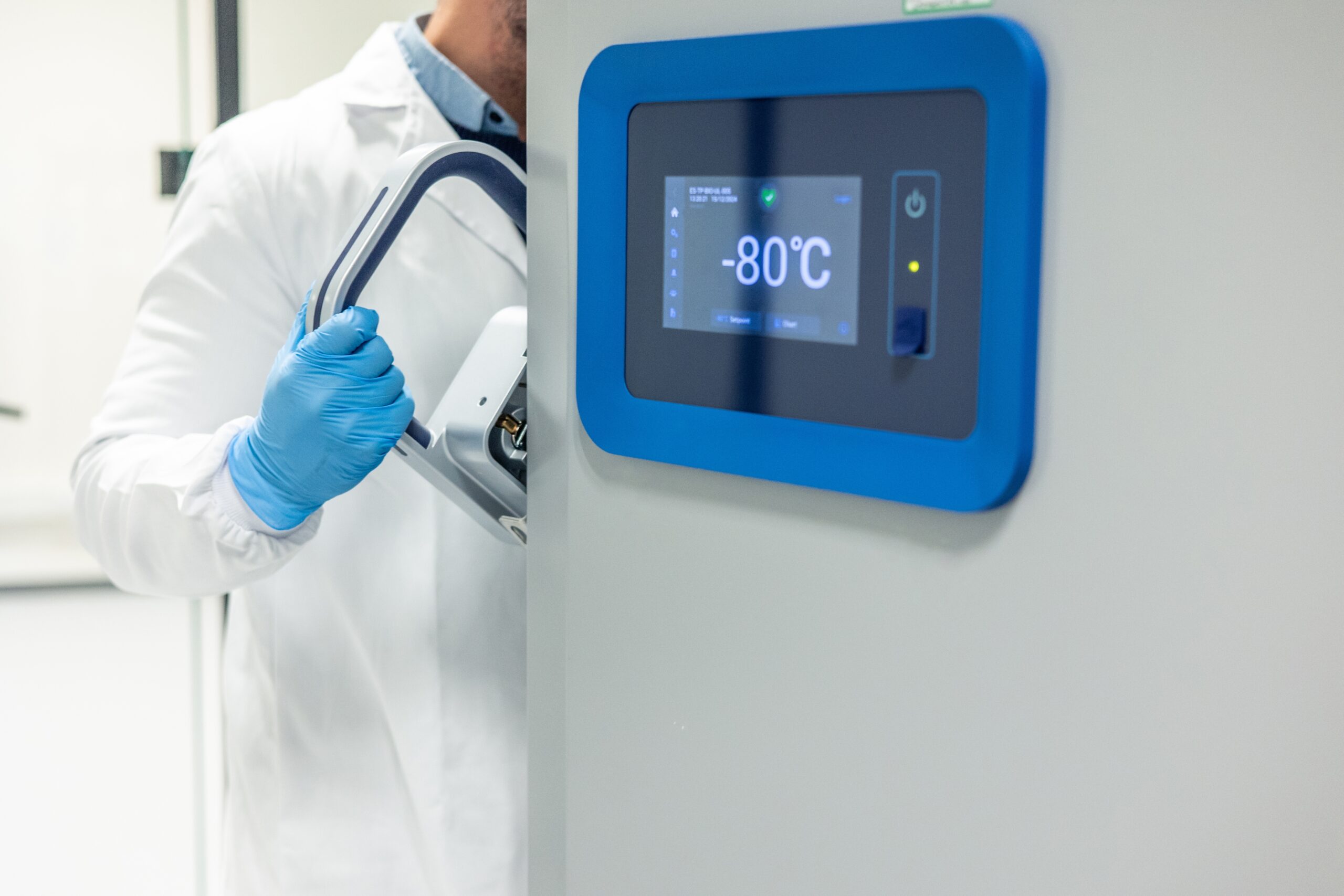
At TML.science, finished FMT products are stored at −85°C and quarantined for at least 90 days before they can be considered for release. During this period, continued donor monitoring, laboratory testing and quality review form part of the wider manufacturing framework.
Traceability from Starting Material to Release
Human-derived microbiome products also require robust traceability.
For FMT, the finished preparation must remain connected to information about its source material and manufacturing history. This creates a documented chain from the donor and individual donation through processing, testing and storage to final product release.
Maintaining this history allows relevant information to be reviewed and supports quality management, regulatory oversight and investigation where required.
Traceability is therefore not simply an administrative requirement; it forms part of maintaining control over the product throughout its lifecycle.
Manufacturing for the Future of Microbiome Therapeutics
The manufacturing requirements of microbiome therapeutics will vary considerably depending on the product. Defined bacterial consortia, individual LBPs, bacteriophage-based approaches, microbiome-derived products and FMT each present different production and analytical considerations.
Specialised infrastructure, anaerobic manufacturing capabilities, process development, analytical technologies and scalable production will be important in supporting these different approaches.
Greater standardisation is another area of focus. Continued development of analytical methods, quality attributes, reference standards and manufacturing controls could help establish more consistent approaches to how microbiome products are produced and characterised.
FMT demonstrates many of these manufacturing considerations in practice. At TML.science, more than 15 years of experience in the field has contributed to an established manufacturing framework covering donor qualification, controlled processing, storage, testing, traceability and formal product release.
Manufacturing microbiome therapeutics ultimately requires a balance: preserving the biological characteristics that make these products unique while applying the controls required for pharmaceutical manufacturing.
Developing the processes, technologies and infrastructure to achieve that balance will remain an important part of translating microbiome research into clinical applications.
