
Introduction
Faecal microbiota transplantation (FMT) involves transferring gut bacteria from a healthy donor to a recipient to help restore microbiome balance. As interest in microbiome-based therapies has increased, so too has the focus on the quality, safety and consistency of FMT preparations.
The quality of any FMT preparation begins with the donor material. Robust donor screening, microbiome characterisation and controlled manufacturing processes are essential for maintaining high standards throughout the production pathway. Without these safeguards, variability in donor material and processing methods can make it difficult to achieve consistent outcomes. This article explores why donor qualification and standardisation are central to responsible FMT manufacturing.
Why Donor Screening Is the Foundation of FMT Manufacturing
No two gut microbiomes are identical. Factors such as diet, lifestyle, age, environment and medication history all influence microbial composition, meaning donor material can vary considerably between individuals. For organisations involved in FMT manufacturing, this variability makes careful donor selection essential. The quality, safety and consistency of FMT preparations depend on ensuring that donor material meets strict eligibility criteria before entering production. Donor screening is therefore one of the most important components of the manufacturing process. Comprehensive screening programmes are designed to assess donor suitability and minimise the risk of transmitting infectious organisms or other unwanted biological material.
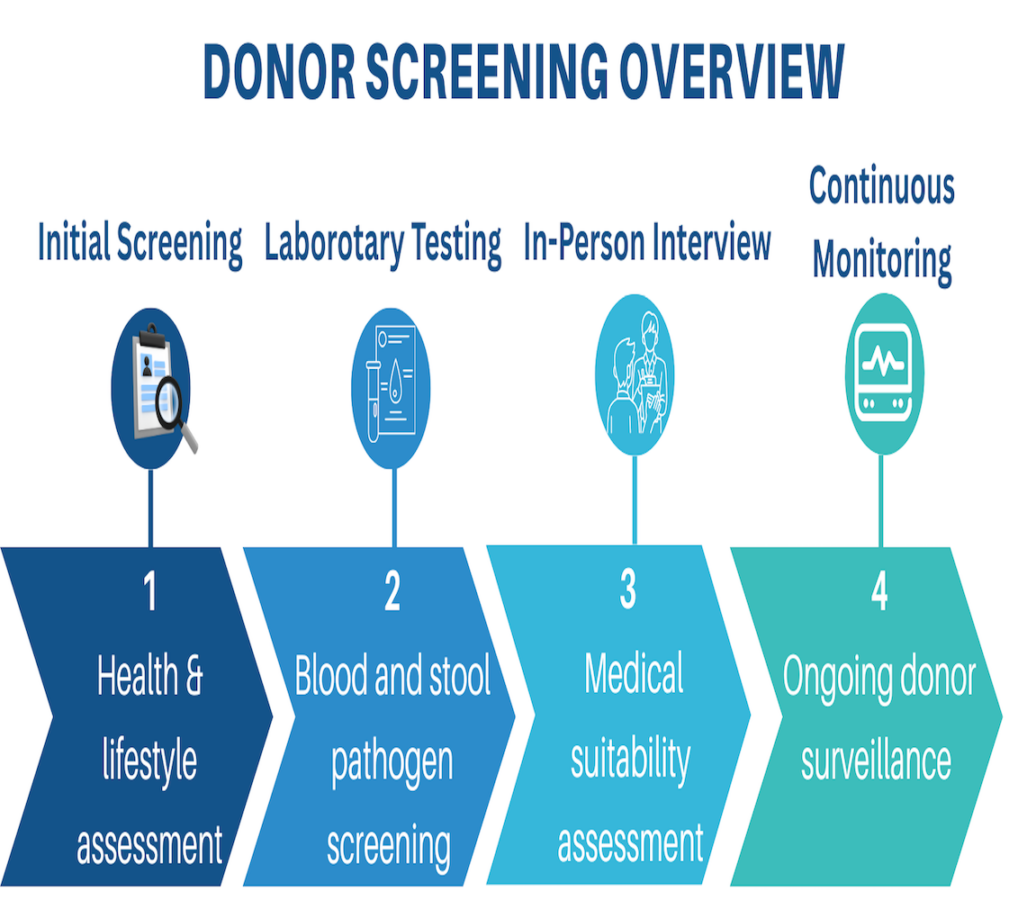
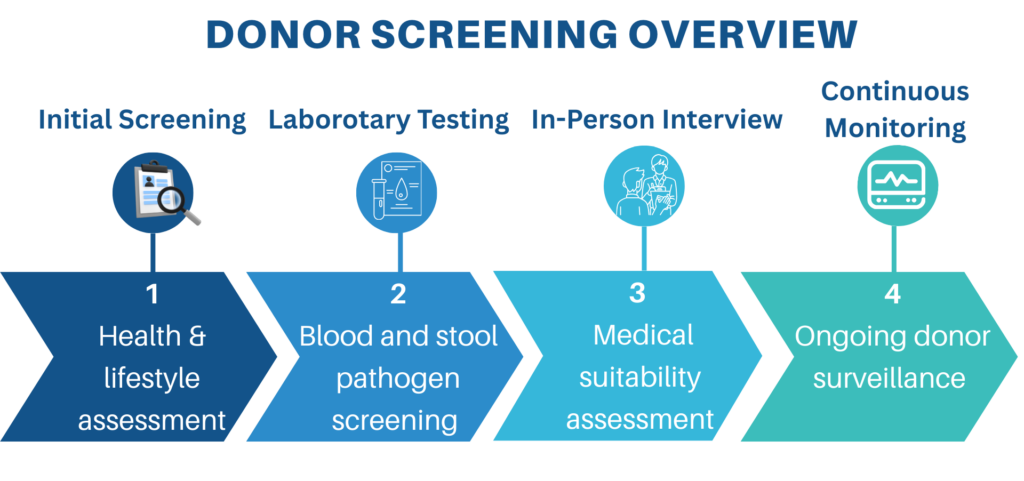
Screening programmes typically include:
•Medical history assessments
•Lifestyle and dietary questionnaire
•Reviews of travel history and antibiotic exposure
•Blood testing for infectious diseases
•Stool testing for pathogens, parasites and antimicrobial resistance markers
•Clinical assessment by qualified healthcare professionals
•Ongoing donor monitoring
Only a small proportion of potential donors successfully meet all screening requirements. This rigorous qualification process forms the foundation of FMT quality assurance and helps support safety, consistency and traceability throughout manufacturing.
Safety, Quality Control and Standardisation
The importance of rigorous donor screening was highlighted in 2019 when the U.S. Food and Drug Administration (FDA) issued a safety alert following serious infections linked to inadequately screened donor material. The incident reinforced the need for screening frameworks specifically designed for FMT and highlighted the unique challenges associated with transferring an entire microbial ecosystem.
Today, FMT manufacturing relies on multiple layers of quality control designed to support safety, consistency and traceability. Comprehensive donor screening programmes typically incorporate infectious disease testing, antimicrobial resistance screening and ongoing donor monitoring, helping to reduce potential risks before material enters production.
Beyond donor qualification, robust manufacturing standards are equally important. Standardised procedures, validated processing methods, controlled storage conditions and comprehensive documentation all contribute to maintaining product quality throughout the manufacturing pathway.
Together, these measures help support consistency between batches and strengthen confidence in the handling, preparation and quality of FMT material.
TML.science’s Approach to Donor Screening and Quality Control
At TML Science, donor screening is the foundation of product quality and safety. Every stage of the donor qualification process is designed to support the production of high-quality microbiome preparations and minimise potential risks associated with donor material.
Potential donors undergo a comprehensive, multi-stage screening programme that includes detailed medical history reviews, health assessments, lifestyle questionnaires, blood testing and stool testing. Donors are also subject to ongoing monitoring and repeat testing throughout the donation period to help ensure continued suitability over time.
Due to the stringent requirements of this process, only approximately 3–5% of applicants successfully qualify as donors. This rigorous approach helps ensure that donor material entering production meets strict safety and quality standards.
Quality control extends beyond donor screening. Samples are processed according to defined standard operating procedures (SOPs), with controlled manufacturing processes, validated handling protocols and comprehensive quality checks throughout production. Material is stored under controlled conditions and supported by full batch traceability, helping maintain consistency from donor qualification and sample collection through to processing, storage and final preparation.
By combining rigorous donor qualification with robust manufacturing controls and quality assurance systems, TML.science is committed to maintaining high standards of safety, consistency and product integrity across its microbiome manufacturing operations.
The Future of Donor Selection
Donor screening remains the foundation of safe and responsible FMT manufacturing. However, advances in microbiome analysis are creating new opportunities to better understand the relationship between donor and recipient microbiomes.
Recent research has explored whether artificial intelligence could help identify donor-recipient microbiome compatibility by analysing large microbiome datasets and predicting how microbial communities may interact following transplantation. While these approaches are still under investigation, they highlight a potential shift towards more informed and personalised donor selection strategies.
Alongside continued improvements in donor screening, microbiome characterisation and manufacturing controls, these developments may contribute to greater consistency and standardisation across the field.
Although significant work remains before such approaches become widely adopted, they demonstrate how advances in data analysis could support the next generation of microbiome-based therapies.
Conclusion
The safety and quality of FMT begin long before a preparation reaches a recipient. Donor screening, microbiome characterisation and manufacturing controls all play a critical role in ensuring product integrity.
Careful donor qualification, controlled processing and robust quality assurance measures help support safe, consistent and well-characterised FMT preparations. Together, these processes form the foundation of responsible FMT manufacturing. At TML Science, our work is guided by a commitment to donor quality, sample integrity and scientific rigour.
